Sargassum in Tulum: Where to Swim When the Beach Is Covered
By Karla & Max · · Travel Planning · Updated
Sargassum is the brown seaweed that drifts across the Atlantic and washes onto the Caribbean coast of Mexico. In a light year you barely notice it. 2026 has not been a light year.
This is what is actually happening, how to check it yourself, and where to swim when the sea is not an option.
Where the 2026 Season Stands
Quintana Roo has cleared more than 105,000 tonnes of sargassum so far this season, past the previous record of roughly 92,800 tonnes set in 2025. (Updated 12 September 2026: the April-to-August total is now 124,852 tonnes, and the state's municipal breakdown puts Tulum fourth, behind Playa del Carmen, Cancun and Puerto Morelos. We had said Tulum takes the largest share; the figures do not support it.)
Satellite monitoring suggests the season has crested, with totals easing across the monitored regions, but arrivals can continue into early or mid October. Meanwhile the northern end of the corridor — north Cancun, Isla Mujeres, Puerto Morelos — has been trending back toward clear water while the Playa del Carmen to Tulum stretch holds at moderate.
How to Check Before You Go
Do not rely on a hotel's own photographs, and do not rely on a guide written last winter. Sargassum changes week to week and beach to beach.
- Sargassum monitoring maps publish daily or weekly colour-coded conditions per beach for the whole Quintana Roo coast. They are the fastest way to see the current picture. - Beach webcams at the larger beach clubs show you the water in real time. - Traveller forums. People post photographs of the actual beach on the actual day, constantly. This is the least polished and most reliable source there is.
Check about a week out, then again two days before you fly. Anything older than that is history rather than forecast.
Which Beaches Clear First
Two patterns hold most of the time.
North beats south. The stretch from Playa Paraiso north toward Xcacel and Akumal generally takes less than the southern beach road. Akumal's bay is partly protected and often swimmable when Tulum's open coast is not.
Managed frontage beats wild frontage. Beach clubs and the larger hotels rake and truck their own stretch every morning. The public accesses in between often do not get cleared at all. That is a real argument for buying a drink at a beach club on a bad week rather than walking down to a free access point.
Bays, coves and anywhere with a reef offshore fare better than open, straight coastline. Which is precisely what Tulum's hotel zone is.
Water That Sargassum Never Reaches
This is the part that saves a trip.
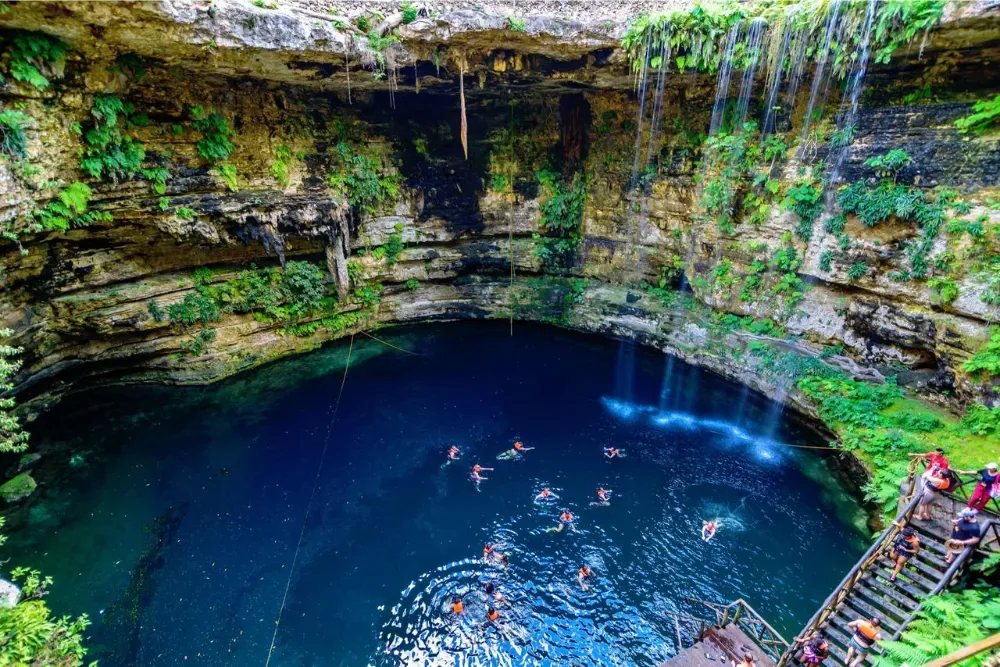
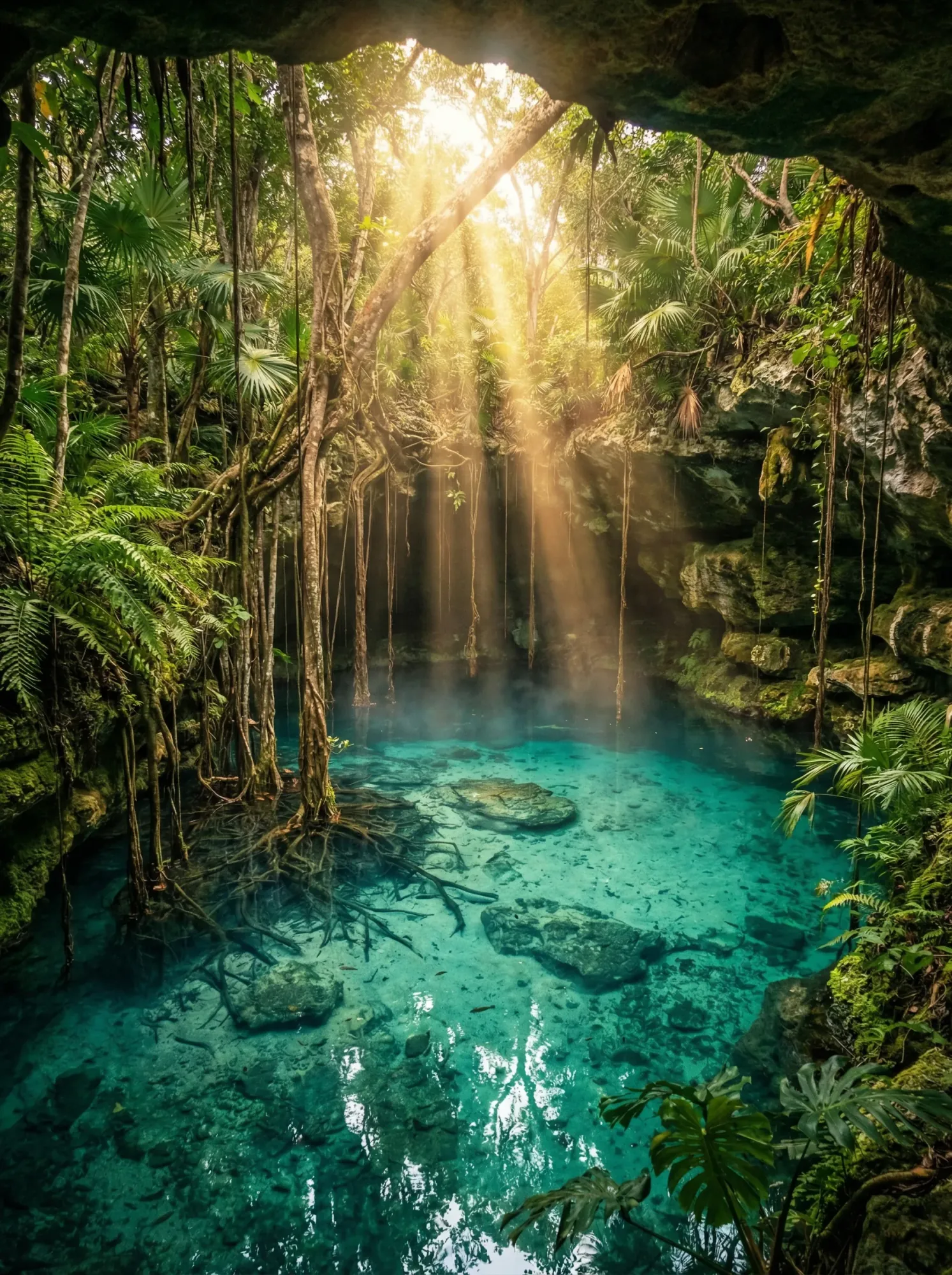
Cenotes. Freshwater sinkholes, inland, often shaded or partly underground, sitting at 24 to 25 degrees year round. There are hundreds within an hour of Tulum. Gran Cenote is about ten minutes from Aldea Zama, Cenote Calavera is closer, and the Dos Ojos cave systems are twenty to forty minutes north. In a bad seaweed year this is not a consolation prize — for a lot of people it turns out to be the best swimming of the trip.
Laguna Kaan Luum. A turquoise lagoon a few minutes south of town with a shallow ring and a deep centre. No seaweed, ever.
A pool. Obvious, and worth saying anyway: on a bad beach week, having a pool where you are staying changes the entire shape of the day. Ours is shared by the complex, set in a planted garden with palapas and loungers, and in a quiet year like this one it is frequently empty.
Bacalar. The lagoon of seven colours, about two hours south. Freshwater, no sargassum, and one of the most striking places in the country. It is a long day trip or a good overnight.
Cozumel and Isla Mujeres. West-facing water on both, sheltered from the Atlantic drift. Ferries run from Playa del Carmen and Cancun.
Should You Cancel?
If a swimmable ocean every day is the entire point of your trip, and you are locked into July, August or September, consider the Pacific coast or the northern Yucatan instead. We would rather say that plainly than have you discover it on day two.
If the sea is one of several things you came for — cenotes, ruins, food, jungle, quiet — then a bad seaweed week costs you some beach days and nothing else. The rest of what makes this coast worth the flight happens inland, where the water is fresh, cool and completely indifferent to what the Atlantic is doing.
Sargassum season also ends. Roughly November through April is the reliably clear window, and it is no coincidence that it is also the expensive one.