Tulum in August: Empty Streets, Record Seaweed, and Why We Would Still Come
By Karla & Max · · Travel Planning · Updated
Two questions dominate every Tulum forum and travel group this month. The first is the old one: what is the weather like in August? The second is new, and people are asking it constantly: is Tulum dead?
Both deserve a straight answer, so here are both, written in the third week of August 2026.
The Short Version
August in Tulum is hot, humid, wet in the afternoons, and this year it is very quiet. The sargassum season has been one of the worst on record. Prices have come down across the board. The ruins just got cheaper to visit and the national park around them is now free to walk into.
If you want a guaranteed clear ocean and a busy, buzzing town, this is the wrong month and the wrong year. If you want cenotes, ruins, space, and a town where you can get a table anywhere, it is one of the best windows in a decade.
The Weather, Honestly
Daytime highs sit around 32 to 33 degrees Celsius and the overnight low rarely drops below 24. The humidity is the part the numbers hide. A walk that would be pleasant in January becomes a decision in August.
That reshapes your day more than anything else on this page:
- Before nine. Sunrise is around 6:20 and the two hours after it are the best of the day. Ruins, beach, a bike ride, a run. All comfortable, none of it comfortable at noon. - Eleven to four. Water, shade, or indoors. Not walking around. - After five. The heat breaks slightly, the light goes long, and the town comes back outside.
The rain forecast will show thunderstorms every single day of your trip. Ignore the icons and look at the pattern. August rain here usually arrives as one heavy afternoon event: bright morning, sky darkening after lunch, twenty to forty minutes of serious rain, then it clears and steams. Days that are grey from morning to night happen and they are the minority.
An umbrella is useless because the rain comes sideways. A light rain shell packs to nothing and is all the wet-weather kit you need.
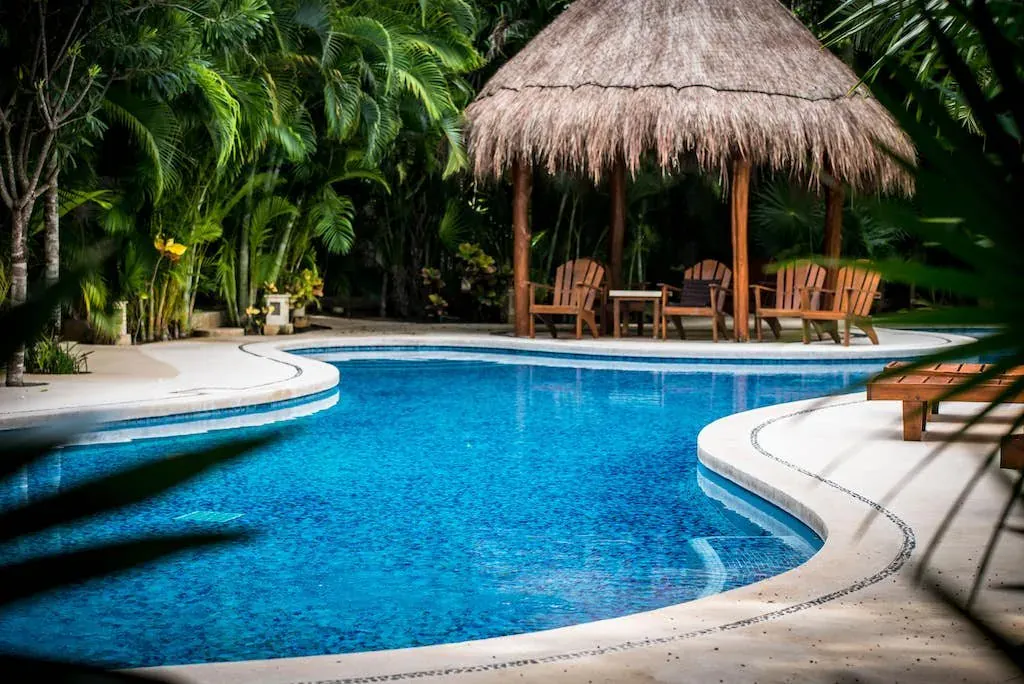
Air conditioning stops being a luxury in August. One unit in the living room with the bedroom doors open does not work in this humidity. You want a bedroom you can actually cool, and you want it still working at three in the morning.
Is Tulum Actually Dead?
Not dead. Genuinely, measurably quiet.
Hotel occupancy in Tulum's coastal zone has been running around 30 per cent this summer, and occupancy in the town centre has been reported as low as 15 per cent. Around thirty businesses in the hotel zone closed during 2026. Tulum's own airport lost a large share of its international traffic after several carriers suspended or cut routes. Restaurants that needed a booking three weeks ahead two years ago are taking walk-ins on a Friday night.
The causes are not mysterious and locals will tell you all of them before you ask. Tulum spent five years charging Cancun prices for Mexico City service. Taxi fares became a running joke. A record seaweed season arrived on top of it. The federal government has since launched a recovery push and cut some of the fees that made visitors feel fleeced, which we will come to.
What that means for a visitor right now is straightforward. The version of Tulum that people complained about — overpriced, overcrowded, aggressively commercial — is the version that is missing. The cenotes, the ruins, the jungle and the food are all still here, with far fewer people in front of them.
If you are the sort of traveller who came for the nightlife and the scene, you will find it thin. If you came for everything else, this is the good year.
Sargassum: The Bit Nobody Should Sugarcoat
Sargassum is the brown seaweed that drifts onto this coast, and 2026 has been bad. Quintana Roo has cleared more than 105,000 tonnes so far this season, past the previous record of roughly 92,800 tonnes set last year. (Updated 12 September 2026: the state's own figures for April to August now stand at 124,852 tonnes, and they put Tulum fourth among municipalities, well behind Playa del Carmen. We had said Tulum takes the largest share. That was wrong, and we have written a correction.)
The honest picture:
- It varies week to week and beach to beach. A stretch that is unusable on Tuesday is often fine by Friday, and a bad patch in the middle of the strip can be clean two kilometres north. - Beach clubs and hotels clear their own frontage, with wildly varying effort. - Where it piles up and rots, it smells. - Satellite data suggests the 2026 season has crested, but the season can run into early or mid October. - None of it touches the cenotes, and none of it touches a pool.
If a swimmable ocean every single day is the entire point of your trip, book somewhere else this year. We would rather tell you that now than have you find out on day two. If the ocean is one of five things you want to do, it is an inconvenience you plan around.
Cenotes Are Why August Still Works
This is the part that flips the argument.
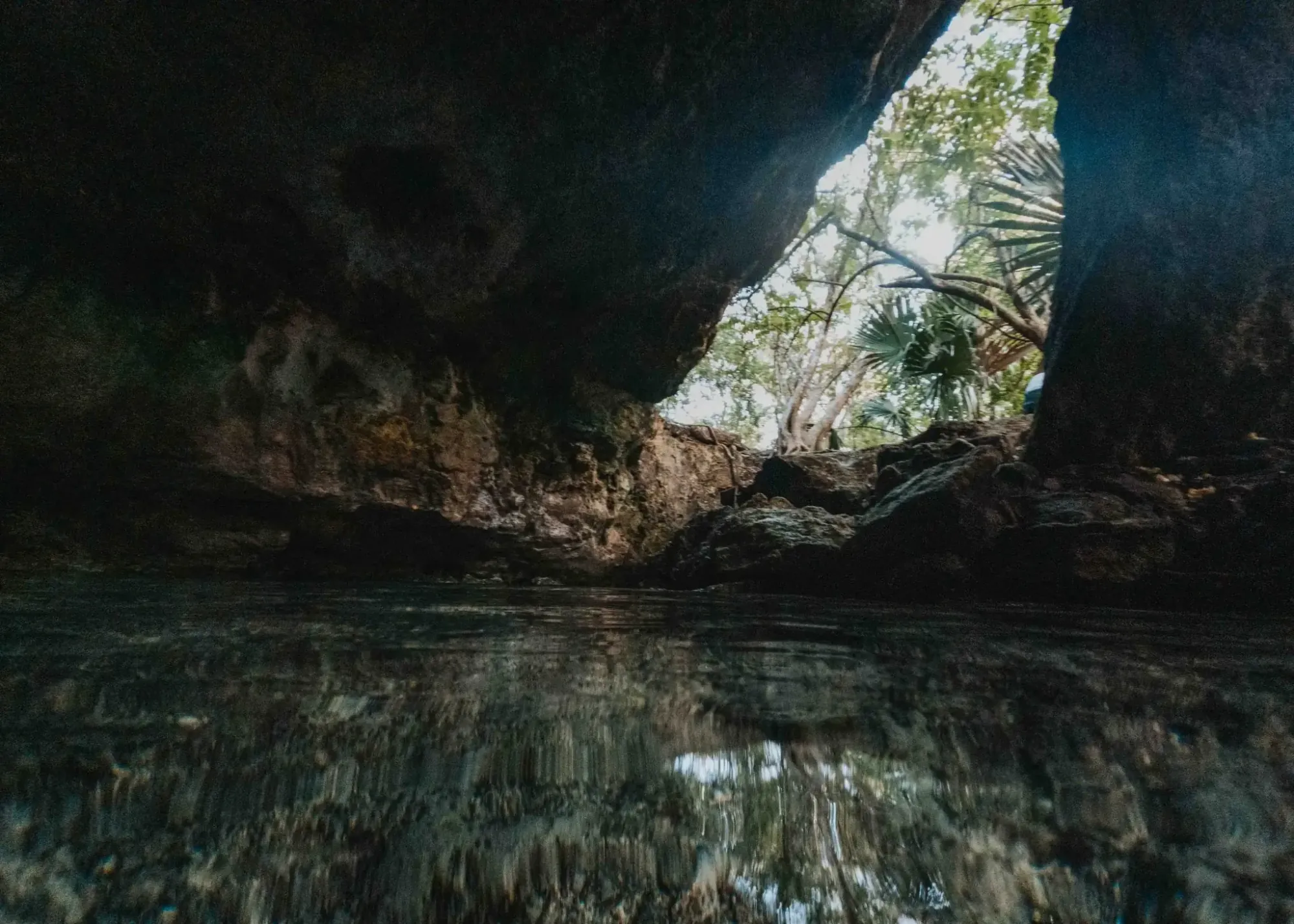
Cenotes are freshwater sinkholes, mostly inland, mostly shaded by jungle, often partly underground. The water sits around 24 to 25 degrees year round. In February that is bracing. In August it is the best feeling available in the state.
They are cool when the air is not. They are shaded when the sun is punishing. Sargassum does not reach them. And in a quiet August the queues that form at the famous ones in high season simply are not there.
Gran Cenote is about ten minutes from Aldea Zama by car. Cenote Calavera is closer. Dos Ojos and the bigger cave systems are twenty to forty minutes north. Build an August around cenotes rather than beach clubs and you have a better trip than the person doing the identical itinerary in March.
What Just Got Cheaper
A federal decree signed in Tulum on 17 July 2026 changed the pricing at the archaeological site and the national park around it, effective 20 July.
- Foreign visitors pay 100 pesos to enter Parque del Jaguar, and 165 pesos for the combined archaeological zone and national park. That is 265 pesos in total, roughly 14 US dollars. - Mexican nationals enter the park free and pay 80 pesos for the combined ticket, Monday to Saturday. - On Sundays, Mexican nationals and foreign residents pay nothing. - Minors, seniors, students, teachers, people with disabilities, accredited guides and local residents go free with valid ID. - The electric transport inside the park is 20 pesos for adults and 10 for children.
You can also simply walk into the park and reach the beach without paying the archaeological zone fee, which was the single most resented charge of the last two years.
Accommodation prices have moved too. Our own low season runs from mid-April to the end of October, and August sits squarely inside it — the difference against a January booking is close to half. Flights into Cancun are cheaper in August than in any winter month.
What to Actually Do in August
Before nine. The Tulum ruins open at eight, and the first hour is the difference between a good visit and a heat-stroke visit. Or the beach, or the ride into town before the road gets hot.
Eleven to four. Cenotes, the pool, a long lunch under a roof with a fan. This is also when the rain arrives, which makes the cenote plan self-justifying.
After five. The beach road for sunset, or dinner in the pueblo, where the prices are roughly half what they are on the beach strip and the food is frequently better.
A day worth losing to travel. Coba, which is inland, jungle-shaded and noticeably cooler than the coastal ruins. Or Punta Laguna. Or north to Akumal.
Skip. Anything involving hours of standing in open sun, which includes some of the more ambitious ruin day trips and most midday boat tours.
Hurricanes, Practically
Atlantic hurricane season runs June to November and the activity curve climbs through August towards a September peak. In most years, most August visitors experience nothing worse than heavier rain and rough surf.
The practical version: buy insurance that covers weather disruption, prefer flights you can change, and watch the forecast in the week before you fly rather than the month before. Named storms give days of warning. The disruption that actually affects travellers is usually at the airport, not in town.
Packing for August Specifically
Reef-safe sunscreen, which several cenotes now require and check. Mosquito repellent, more than you think, mostly for dusk. A light rain shell. Two pairs of shoes so one can dry, because nothing dries overnight in August humidity. Quick-dry fabrics over cotton. Pesos in cash for colectivos, taxis, cenote entry and the good taco places. A refillable bottle, since tap water is not drinkable anywhere in Mexico and any decent rental provides drinking water.
Leave the hairdryer and the beach towels. Rent a bike rather than a car if you are staying centrally: Tulum is flat, the distances are short, and moving air beats a parked car with the engine running.
So, Is August a Good Time to Visit Tulum?
If you need guaranteed sun and clear water every day, no. Come in January and pay January prices.
If you are flexible about the shape of your days, interested in cenotes and ruins and food as much as sand, and willing to swim in the afternoon rain, August 2026 is a good month and an unusually cheap one. You are trading the ocean for the quiet, and this year the quiet is remarkable.
The people who have a bad August in Tulum are almost always the ones who planned a February trip and took it in August.